Your Denver Home Passed Inspection. Your Buyer's Insurer Might Still Say No.
August 20, 2026
August 20, 2026
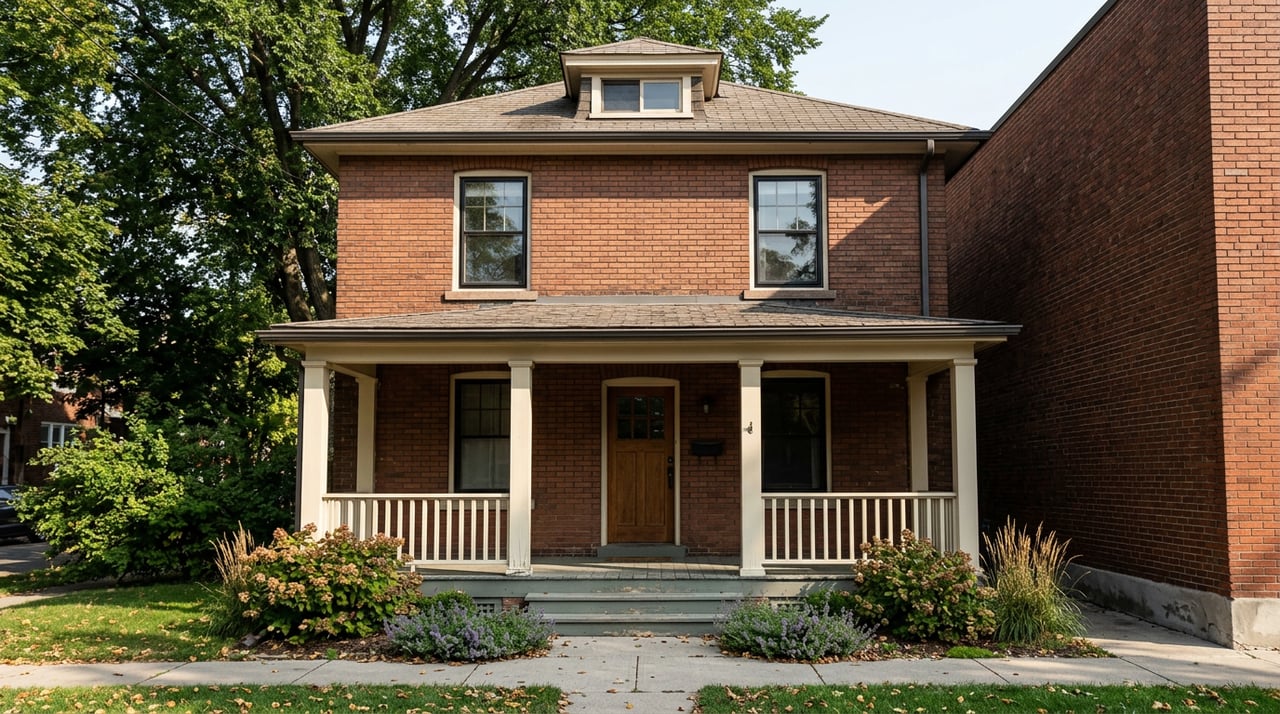
A seller in Park Hill lists a 1948 bungalow. The inspection comes back clean enough to close: original hardwood, a newer roof, nothing that scares a buyer off. Two weeks into contract, the lender calls. The buyer's insurance carrier has flagged the electrical panel and won't bind a policy until it's replaced. The deal doesn't die, but it stalls, the seller eats a credit they didn't budget for, and everyone learns the same lesson a few weeks too late: in Denver's older neighborhoods, passing inspection and being insurable are two different tests, and only one of them shows up on the inspector's checklist.
That gap is the thing worth understanding before you list, not after a buyer's underwriter finds it for you.
Home inspectors describe what they see. They note a panel, a pipe, a wiring type, and whether it currently functions. What they don't do is decide whether an insurance company will cover the house. That decision happens separately, often after the inspection period has already closed and the buyer is deeper into the transaction than anyone wants to be when a new problem surfaces.
Carriers writing policies on older Denver homes have gotten specific about what they won't insure. Federal Pacific Stab-Lok and Zinsco panels are near the top of the list. Both have documented histories of breakers failing to trip during an overcurrent event, and once an underwriter's system flags either brand, the standard response is to require replacement before the policy binds, regardless of whether the panel has ever caused a problem in that particular house. Active knob-and-tube wiring gets the same treatment. So does aluminum wiring from the 1960s and 1970s, which loosens at its connections over time and raises the odds of overheating in exactly the kind of older bungalow common in Capitol Hill, Park Hill, and Washington Park.
Plumbing carries its own version of this problem. Galvanized steel supply lines, standard in anything built before 1960, corrode from the inside until they restrict flow or fail outright, and most insurers now want them replaced with copper or PEX before they'll write full coverage. Polybutylene piping, installed in a narrower window between 1978 and 1995, has an even harder ceiling: it degrades from chemical exposure to municipal water treatment, it can't be spot-repaired with matching material since it's no longer manufactured, and many carriers exclude PB-related damage from coverage or decline to insure the property at all.
None of this shows up as a failed inspection. It shows up as a declined quote, and by the time it does, the seller is usually the one holding the clock.
This isn't a generic older-home problem. Denver's geology and climate make it a sharper one. The city sits on bentonite clay that swells when wet and shrinks when dry, and that constant movement puts pressure on underground sewer lines until they crack, shift, or develop the low spots inspectors call bellies. Add altitude: Denver records more than 90 freeze-thaw cycles a year, roughly double what a comparably built home would see in a lower-altitude Midwest city, and each cycle widens the hairline cracks a little further. Mature street trees, the kind that make Park Hill and Washington Park feel established rather than new, send roots straight into those cracks looking for moisture.
The result is that homes in Capitol Hill, Park Hill, Washington Park, Highlands, Berkeley, University Park, and Baker, most of them built before 1980, are disproportionately likely to still be running original clay tile or cast iron sewer lines. A standard buyer home inspection does not include a sewer scope. It's an add-on, typically a few hundred dollars in most of Colorado, and it's also the single most commonly skipped step in a market where buyers are still waiving contingencies to win a contract. When root intrusion or a cracked clay line shows up after closing instead of before, the repair bill runs anywhere from a few thousand dollars to as much as $25,000 depending on how much of the line has failed.
Insurers know this pattern as well as inspectors do, which is part of why underwriting on Denver's historic housing stock has gotten tighter. A Victorian in Baker can cost meaningfully more to insure than a similarly priced home in newer construction elsewhere in the metro, purely because the age of the electrical and plumbing systems changes the carrier's claim-frequency math. Colorado homeowners overall are now paying somewhere between $4,200 and $5,200 a year for coverage, well above the national average, and non-renewals have climbed sharply since 2018 and kept climbing into 2026. Carriers responding to that pressure are leaning harder on exactly the systems that show up most in pre-1980 Denver homes.
There's a second friction point that has nothing to do with pipes or panels, and it's just as easy to get wrong. Colorado's Seller's Property Disclosure requires sellers to state what they know about radon, and the requirement is broader than most sellers assume. It doesn't just ask whether current levels are elevated. Under the law passed as SB23-206, sellers have to disclose any historical radon test results and any mitigation work, even if a prior test came back below the EPA's action level of 4.0 picocuries per liter. A seller who tested years ago, got a clean result, and never thought about it again still has to report that test.
The stakes are higher in Colorado than in most states because the baseline is higher. The average indoor radon level here runs around 6.4 picocuries per liter, roughly five times the national average of 1.3, and close to half of Colorado homes test above the EPA's action threshold. That's not a reason to panic. Mitigation systems are straightforward and typically run about $1,500 to install with a few dollars a month to operate. But it does mean the radon line on the disclosure form isn't a box to skim past, and getting it wrong isn't a paperwork technicality. Under Colorado law, sellers remain on the hook for known material defects even beyond what the statutory disclosure form covers.
The fix here isn't complicated, but it has to happen before a buyer's lender finds the problem for you. Sellers of pre-1980 Denver homes are generally better served by treating the insurance underwriter as a second inspector who's going to look at the house whether they're invited or not.
Some of this work, especially electrical or plumbing repairs identified before listing, is exactly what Compass Concierge exists to front, letting sellers make the fix now and settle the cost at closing instead of losing leverage mid-contract.
Does Colorado require a home inspection before selling? No. Colorado doesn't mandate a seller-side inspection. Buyers typically order their own during the contract's inspection period, and it's a separate service from a sewer scope, which most standard inspections don't include.
What if my panel is a Federal Pacific but it's never caused a problem? That doesn't change how most underwriters treat it. Carriers flag the equipment itself based on documented failure-to-trip issues, not the individual unit's history, so a functioning panel can still be a bind-or-decline trigger for a buyer's insurance.
Am I required to pay for radon mitigation if a buyer asks for it? Colorado law requires you to disclose known radon information, not to pay for mitigation. Whether you cover the cost is a matter of negotiation between you and the buyer, same as any other inspection item.
If you're weighing a sale in one of Denver's older neighborhoods and want a clear read on what your specific house is carrying before a buyer's underwriter finds it, Harrison McWilliams can walk through what to check first and what's worth fixing before you list. Schedule a free consultation and let's plan your next move.
Stay up to date on the latest real estate trends.


To always be authentic with my clients, team, and partners. Contact me today!